












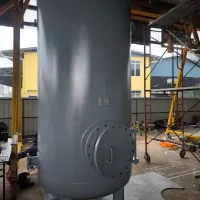


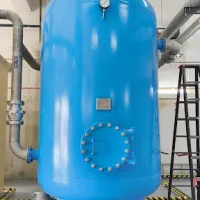
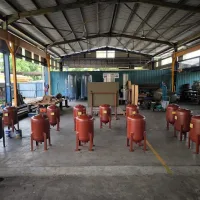


Air Receiver Tank
Whether you require one our standard air receivers or indeed have bespoke requirements – TS Multitech are specialists to meet every demand of the customer.
Our standard DOSH approved air receiver designs cover capacities ranging from 500 Liter to 2,000 Liter in both vertical and horizontal types.
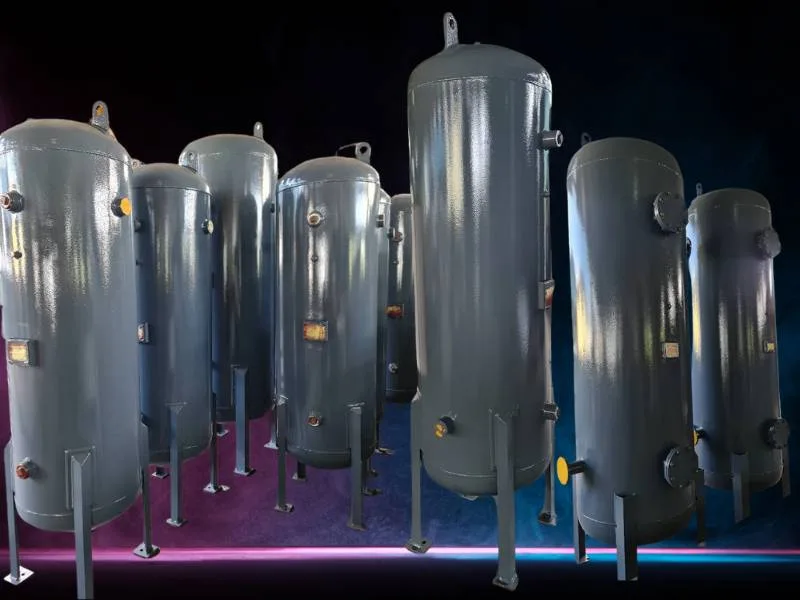
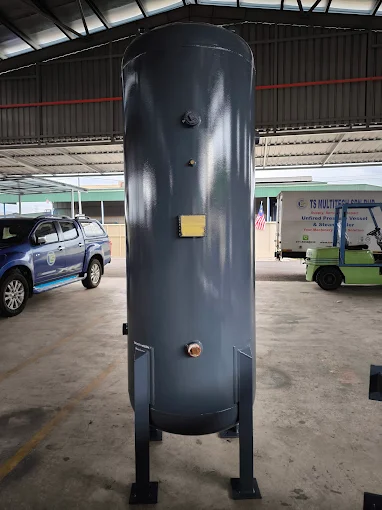
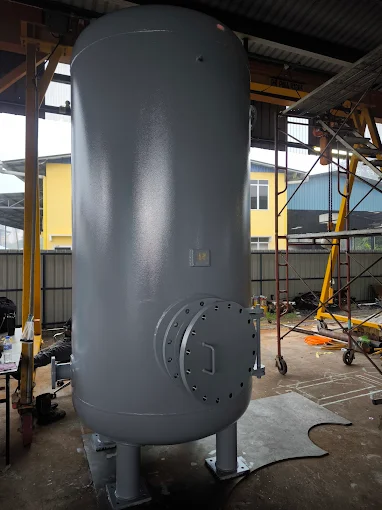
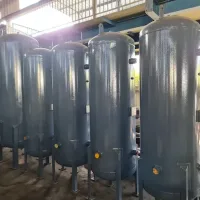
Vertical Air Receiver Tank
- Available options: 500 liter to 10,000 liter
- Design pressure: 150psi to 230 psi depending on model
- Standard accessories : Safety valve, Drain valve, Pressure gauge, GI bush & GI St. elbow
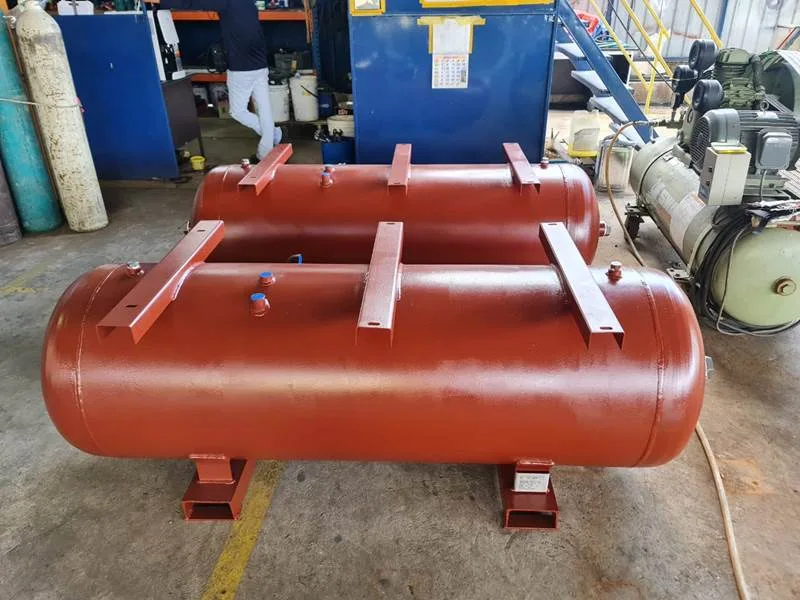
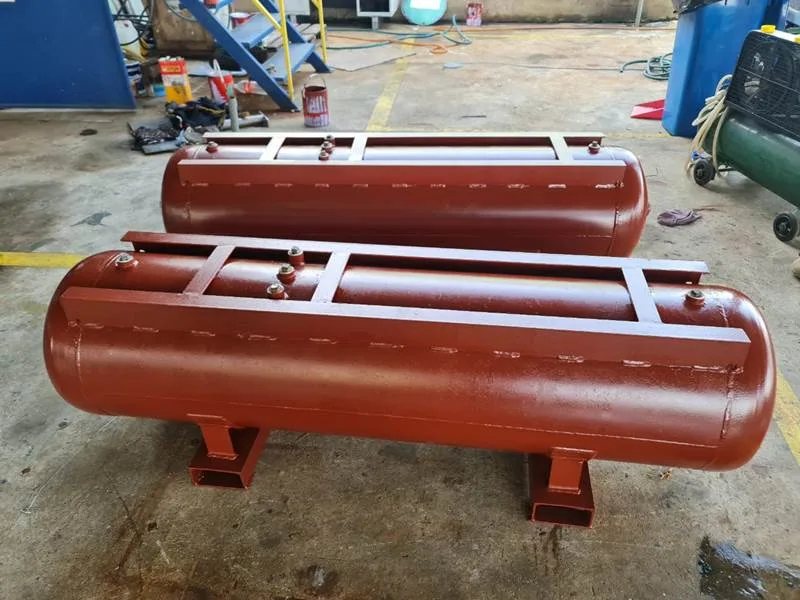
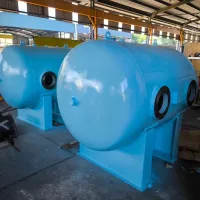
Horizontal Air Receiver Tank
- Available options: 500 liter to 10,000 liter
- Design pressure: 150psi to 200 psi depending on model
- Standard accessories : Safety valve, Drain valve, Pressure gauge, GI bush & GI St. elbow
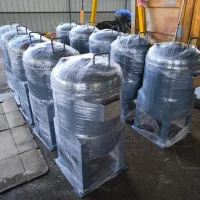
Besides our standard range, TS Multitech have the capabilities to design, detail and fabricate bespoke air receivers to meet your exact needs. When requested, air receivers can be sand blasted with epoxy coatings or hot dipped galvanized for corrosion protection.
Vertical v.s Horizontal Air Receiver Tank
| Consideration | Vertical | Horizontal |
|---|---|---|
| Floor space | Smaller footprint | Larger footprint |
| Height clearance | More important | Generally less restrictive |
| Space Suitability | Suitable where floor space is limited | May suit certain plant layouts |
| Access & Support | Consider access to drain and inspection points | Requires appropriate support and foundation |
Industrial Applications of Air Receiver Tanks
| Industry | Application |
|---|---|
| Manufacturing | Supports pneumatic production machinery and assembly equipment |
| Automotive | Supplies compressed air for pneumatic tools and production operations |
| Food and beverage | Supports compressed-air applications in processing and packaging |
| Engineering workshops | Provides compressed air for pneumatic tools and equipment |
| Construction | Supports compressed-air equipment and site operations |
Compressed air quality requirements differ by application. For example, food production and general workshop applications may require different filtration and air treatment arrangements.
Air Receiver Tank Safety and DOSH Compliance in Malaysia
Air receiver tanks operate under pressure and must comply with applicable safety and regulatory requirements. In Malaysia, air receiver tanks generally fall under the category of unfired pressure vessels (UPV), which are regulated by the Department of Occupational Safety and Health (DOSH).
Under the Occupational Safety and Health (Plant Requiring Certificate of Fitness) Regulations 2024, businesses should ensure that their air receiver tanks meet the applicable design verification, installation and inspection requirements.
Before purchasing or installing an air receiver tank, engineers and procurement teams should consider the following:
- Design verification: Ensure the pressure vessel meets applicable design and safety requirements.
- Certificate of Fitness (CF): Verify whether the vessel requires a valid CF before operation.
- Safety accessories: Check that essential components, such as safety valves, pressure gauges and drain valves, are suitable for the vessel.
- Technical documentation: Review relevant design specifications, drawings, inspection reports and regulatory documents.
Air Receiver Tank Inspection, Testing and Maintenance Services
Regular inspection and maintenance are important for maintaining the structural integrity and operational reliability of an air receiver tank. Over time, moisture accumulation, corrosion and continuous pressure cycles may contribute to material deterioration, affecting the vessel’s condition and safety.
Non-Destructive Testing (NDT)
Non-Destructive Testing (NDT) helps assess the condition of pressure vessel components without damaging the equipment. Depending on the inspection requirements, relevant methods may include:
- Ultrasonic Thickness Testing (UTT): Measures vessel wall thickness to identify potential material loss caused by corrosion.
- Weld Inspection: Examines weld areas for potential defects or discontinuities using suitable inspection methods.
- Corrosion Assessment: Evaluates signs of material deterioration that may affect vessel integrity.
DOSH Submission and Technical Support
Managing an air receiver tank involves more than equipment supply. Businesses may also require assistance with relevant technical documentation, inspection arrangements and DOSH submission requirements.
Discuss Your Air Receiver Tank and Engineering Requirements with TS Multitech
TS Multitech supports industrial customers with air receiver tank supply, non-destructive testing and related engineering services. Contact our team to discuss your pressure vessel requirements and obtain information about the available inspection, testing and compliance support.