
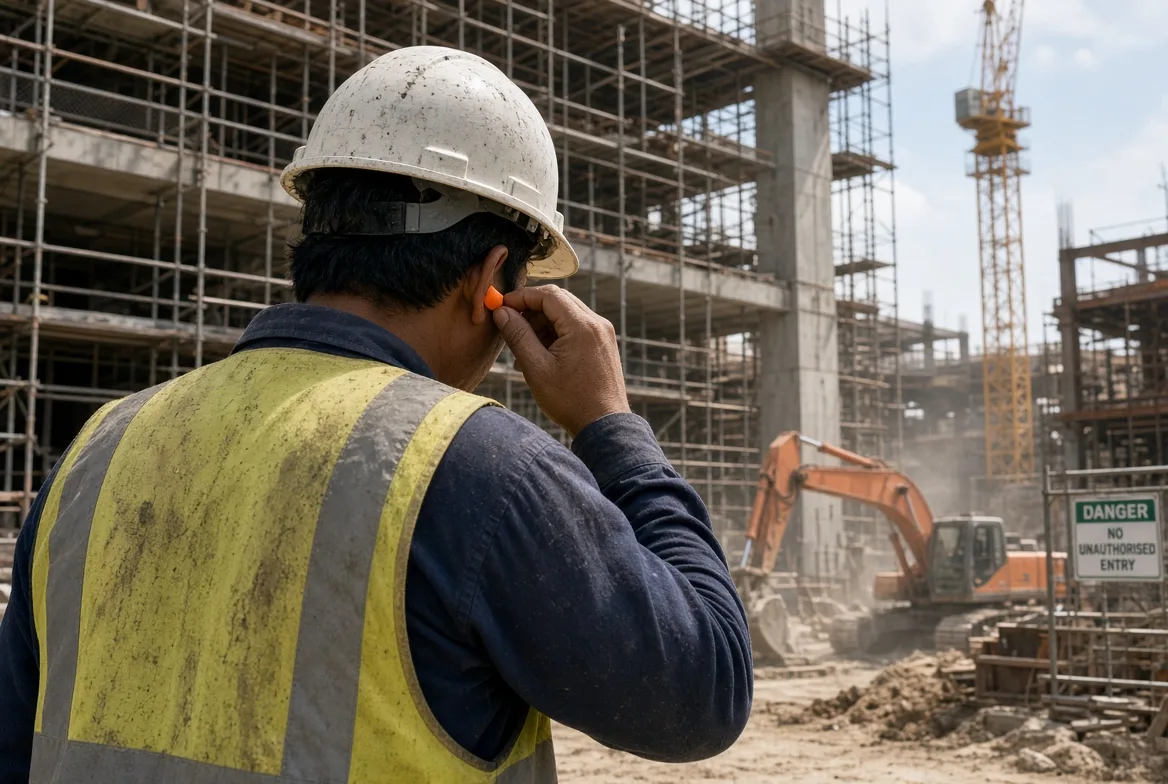
Noise is often accepted as an unavoidable part of industrial operations. Heavy machinery, compressors, generators, boilers, grinders, pumps and production equipment can all create significant workplace noise. Because workers may become accustomed to these sounds, excessive noise is sometimes treated as a normal part of the job.
But unmeasured noise is more than an uncomfortable workplace condition, it can become a serious occupational safety and operational risk.
The danger is that noise-related damage is rarely obvious at first. A worker may not experience immediate pain or noticeable hearing loss, yet repeated exposure can gradually affect hearing, communication, concentration and overall well-being. The World Health Organization (WHO) recognises excessive noise as a health risk associated with hearing impairment, tinnitus, stress, sleep disturbance and cardiovascular effects.
For Malaysian industries, this makes a Noise Risk Assessment (NRA) an important part of workplace safety management, not simply a compliance exercise.
Why Do Some Industries Ignore Noise Hazards?
There are several reasons companies delay formal noise assessments:
- The cost of conducting an assessment may seem unnecessary.
- Employees appear comfortable and report no hearing problems.
- Management assumes basic earplugs are sufficient.
- Noise is considered a normal consequence of industrial machinery.
- Companies are unaware of actual employee exposure levels.
- Previous assessments may no longer reflect changes in machinery, processes or working hours.
The problem is that you cannot manage a hazard accurately if you have not measured it.
In Malaysia, the Occupational Safety and Health (Noise Exposure) Regulations 2019 establish requirements for managing excessive workplace noise. DOSH defines excessive noise using exposure and sound-pressure criteria, including a daily noise exposure level exceeding 82 dB(A), personal noise dose exceeding 50%, maximum sound pressure exceeding 115 dB(A), or peak sound pressure exceeding 140 dB(C).
The Immediate and Hidden Consequences of Ignoring Noise Risk Assessments in Malaysia
| Consequence Area | Immediate Manifestation | Long-Term Impact |
| Workforce Health | Auditory fatigue, temporary hearing changes | Noise-induced hearing loss (NIHL), tinnitus |
| Operational Safety | Masked alarms and communication problems | Greater potential for workplace incidents |
| Productivity & Stress | Concentration difficulties, fatigue | Absenteeism, turnover and lower performance |
| Financial & Legal | Compliance gaps and corrective actions | Compensation claims, disruption and reputational damage |
The consequences can therefore extend well beyond hearing protection.
Safety Blindspots Can Increase Workplace Risk
One of the most overlooked consequences of excessive industrial noise is its effect on situational awareness.
Imagine a production floor where a worker is operating near a stamping machine, compressor or grinder. The equipment may be producing continuous high-level noise while forklifts and other machinery operate nearby.
In this environment, important sounds can become difficult to detect.
These may include:
- Vehicle reversing alarms
- Emergency sirens
- Machine warning signals
- Verbal instructions
- Equipment abnormalities
- Calls from nearby workers
When workers cannot clearly hear these signals, communication becomes more difficult and reaction times may be affected.
More Hearing Protection Is Not Always the Complete Answer
Personal hearing protection is important, but simply providing stronger earplugs or earmuffs does not automatically solve the problem.
Over-attenuation can also create communication and awareness challenges if workers become excessively isolated from important warning signals.
This is why effective noise management should begin with understanding the actual exposure level and workplace conditions rather than immediately relying on PPE alone.
A professional assessment can help determine where noise originates, who is exposed, for how long and what controls are appropriate.
Regulatory Compliance Is Only One Part of the Cost
Many businesses consider a Noise Risk Assessment an expense.
A better way to view it is as a risk-control investment.
Malaysia’s Occupational Safety and Health (Noise Exposure) Regulations 2019 are specifically designed to address occupational noise exposure. DOSH states that employers should appoint a competent Noise Risk Assessor (NRA) to conduct noise exposure assessments as required by the regulations.
Where an assessment identifies excessive exposure, additional measures may be necessary. For example, DOSH states that employees exposed above specified noise exposure limits are subject to requirements including audiometric testing programmes.
The financial consequences of ignoring the issue can therefore involve much more than an assessment fee.
Potential costs include:
- Corrective engineering work
- Replacement or modification of equipment
- Worker compensation claims
- Productivity losses
- Absenteeism
- Employee turnover
- Production interruptions
- Regulatory enforcement
- Reputational damage
The exact financial impact varies between workplaces, but the principle is straightforward:
identifying a hazard early is generally easier than managing its consequences after workers have already been affected.
What Does a Proper Noise Risk Assessment Look Like?
A professional Noise Risk Assessment in Malaysia should provide more than a few random decibel readings.
The objective is to understand actual workplace exposure and determine appropriate controls.
1. Noise Mapping
The assessment begins by identifying major noise sources and measuring sound levels across relevant areas.
This can help identify:
- High-noise production zones
- Machinery generating excessive sound
- Areas requiring restricted access
- Locations where communication is difficult
- Workers who may require further exposure monitoring
The result is a clearer picture of how noise is distributed throughout the facility.
2. Personal Exposure Monitoring
Area measurements alone may not accurately represent what a worker experiences throughout an entire shift.
Workers often move between different locations and perform different tasks.
A personal noise dosimeter can therefore be used to monitor an employee’s cumulative exposure over a working period. This provides a more representative picture of individual exposure.
3. Applying the Hierarchy of Controls
The goal should not simply be to tell workers to wear hearing protection.
Noise hazards should be addressed using a hierarchy of controls where practical.
Possible measures include:
Engineering controls
- Machine enclosures
- Acoustic barriers
- Vibration isolation
- Silencers or dampeners
- Equipment modification
- Preventive maintenance
Administrative controls
- Limiting exposure duration
- Rotating work assignments where appropriate
- Establishing controlled high-noise areas
- Worker training
- Warning signage
Personal protective equipment
- Properly selected earplugs
- Earmuffs
- Combined hearing protection where appropriate
This approach addresses the source and exposure pathway rather than placing the entire responsibility on individual workers.
How Industries Can Start Fixing Noise Hazards
The first step does not have to involve immediately redesigning an entire factory.
Start by asking simple questions:
- Which machines are producing the most noise?
- Which workers spend the most time around them?
- Can employees clearly communicate in these areas?
- Can warning alarms be heard?
- Are workers already reporting ringing ears or communication difficulties?
- When was the last formal noise assessment conducted?
- Have machinery, production processes or working patterns changed since then?
If these questions reveal uncertainty, that uncertainty itself is a reason to investigate further.
A professional assessment can establish a measurable baseline and help management prioritise corrective actions.
Also read : DOSH vs JKKP: Understanding Their Roles in Malaysian Workplace Safety
Why Noise Risk Assessment Should Be Part of Operational Management
Noise control is often placed under the responsibility of the safety department. However, its effects can extend across the organisation.
For operations teams, better noise management can support safer production.
For HR teams, it can contribute to employee well-being and retention.
For maintenance teams, unusual increases in machinery noise may also indicate equipment problems requiring attention.
For management, documented noise assessments provide evidence that workplace hazards are being identified and controlled systematically.
This makes noise management part of overall operational stability, rather than simply a compliance task.
How TS Multitech Can Help With Noise Risk Assessment in Malaysia
TS Multitech provides safety consultancy services that include Noise Risk Assessment in Malaysia, helping businesses evaluate workplace noise hazards and develop practical recommendations aligned with Malaysian requirements.
The company’s safety consultancy focuses on assessing and managing noise-related risks in industrial work environments. Its wider services also include NDT, DOSH submissions, boiler servicing and maintenance, and other industrial compliance solutions.
For businesses operating factories, engineering facilities, construction sites or other high-noise environments, professional assessment can provide a clearer understanding of employee exposure and the controls that may be required.
Is Your Workplace Noise Really Under Control?
From factories to construction sites, excessive noise can go unnoticed until it becomes a bigger problem.
Know your noise risk. Take the first step with a professional Noise Risk Assessment from TS Multitech.
Conclusion
Industrial noise may be normal, but excessive noise should never be treated as harmless simply because workers have become accustomed to it.
Ignoring noise hazards can contribute to hearing damage, communication problems, reduced situational awareness, stress, productivity issues and regulatory exposure.
A proper Noise Risk Assessment provides the information needed to identify where the risks are and determine how they should be controlled.
For Malaysian businesses, the practical first step is simple: measure before assuming.
Start with a workplace noise walk-through, identify potentially high-noise areas and engage a competent Noise Risk Assessor when a formal assessment is required. Taking action early can help protect employees while supporting a safer, more reliable and compliant operation.
Frequently Asked Question About Noise Risk Assessment in Malaysia
How do I know if workplace noise is too loud?
If workers struggle to communicate, hear alarms, or experience ringing ears after work, the workplace should be assessed professionally.
What happens if an industry ignores excessive workplace noise?
Ignoring excessive noise can increase the risk of hearing loss, communication failures, workplace incidents, employee fatigue, and regulatory non-compliance.
Is wearing earplugs enough to control workplace noise?
No. Earplugs provide personal protection, but effective noise control should also consider engineering and administrative measures.
When does a workplace need a Noise Risk Assessment in Malaysia?
A formal assessment may be required when workplace noise exposure meets or exceeds the applicable criteria under Malaysia’s occupational noise regulations.
What is included in a Noise Risk Assessment?
A Noise Risk Assessment typically evaluates noise sources, workplace sound levels, employee exposure, high-noise areas, and suitable control measures.
Disclaimer
The information provided in this article is for general informational purposes only. While we aim to keep the content accurate and up to date, TS Multitech Engineering does not guarantee the completeness or accuracy of the information.
For official guidelines and legal requirements, please refer directly to the Department of Occupational Safety and Health (DOSH Malaysia) or consult with certified safety professionals.